
Community Service Enterprise Gives Students Hands-On Veterinary Experience While Serving SLO County
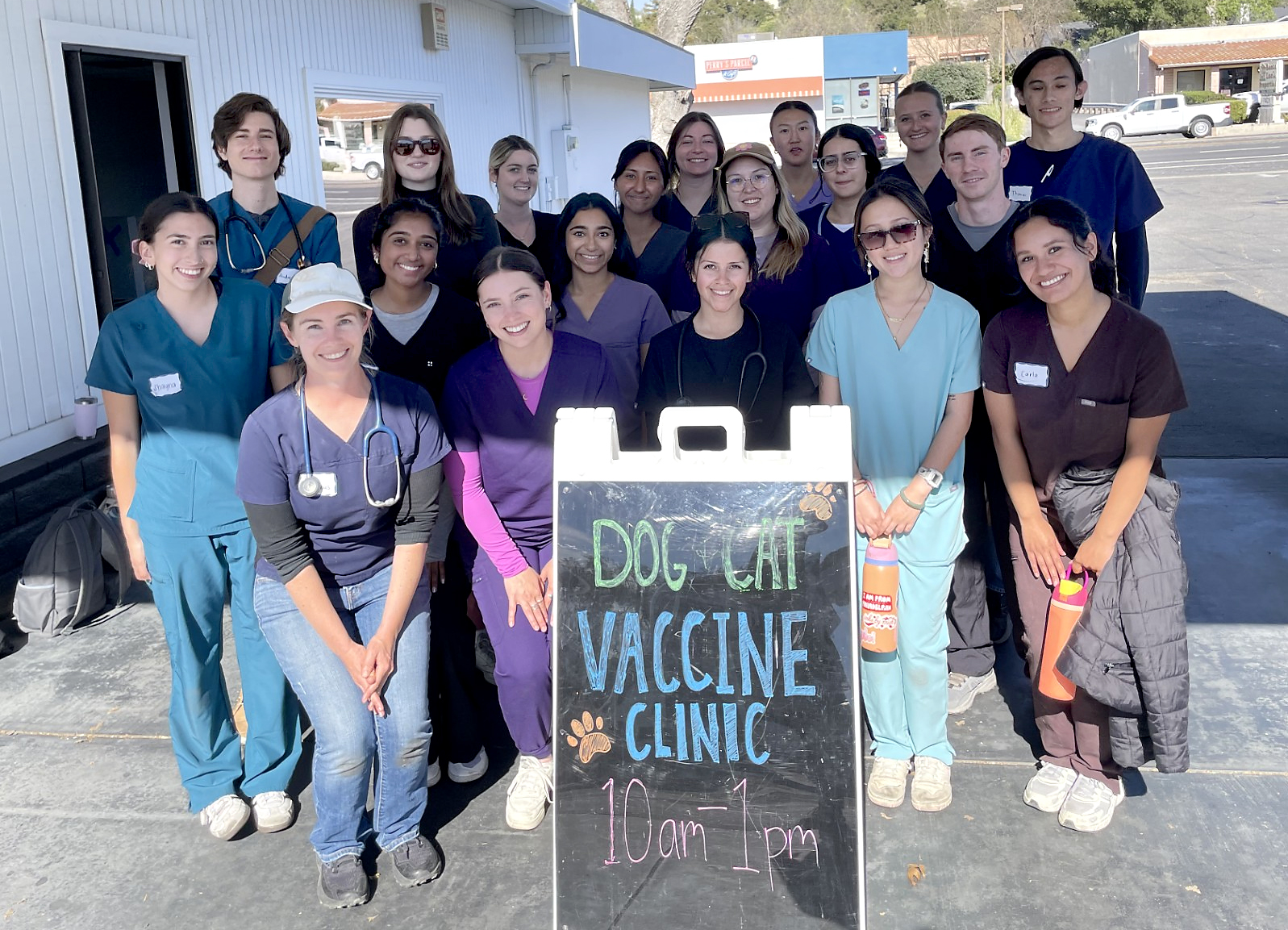
At Cal Poly, learning often extends beyond the classroom, and for students in the Veterinary Community Service Enterprise, it sometimes takes place in pop-up clinics across San Luis Obispo County.
Known informally as Doggy Days, the enterprise course provides basic veterinary services for pets belonging to unhoused and underserved community members while giving students valuable hands-on clinical experience.
“Veterinary Community Service Enterprise is an enterprise course dedicated to putting on pop-up veterinary clinics around San Luis Obispo County,” said Assistant Professor Laura Backus, who helps lead the program. “Students attend a weekly class where they learn the skills they use at the clinic and spend time preparing for and organizing the clinic. Then, they put on three to four clinics over the course of the quarter at various locations around the county.”
The program’s mission is twofold: expand access to basic veterinary care and provide meaningful experiential learning for Cal Poly students.
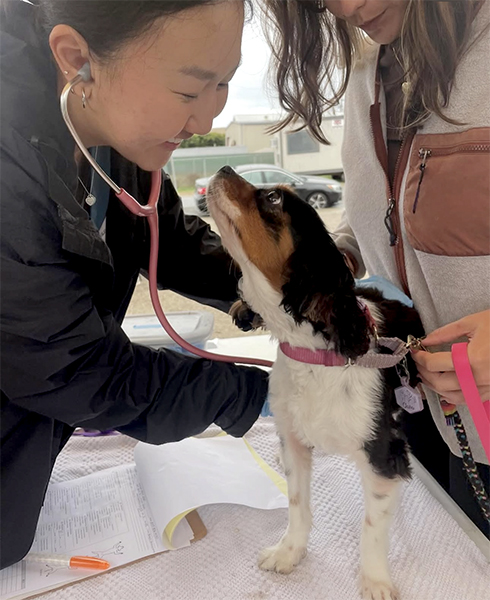 For the local community, the clinics help address a significant gap in access to veterinary services, for pet owners facing financial or logistical barriers that make routine veterinary care difficult to obtain.
Doggy Days clinics primarily provide preventive care for dogs and cats, including vaccinations, deworming treatments and flea management. Students and supervising veterinarians also help manage minor health conditions, such as ear infections or skin issues.
“The goal of the clinic is to make basic veterinary care accessible to people in communities who otherwise have very limited access,” Backus said. “It’s particularly for those who are unhoused or lack the resources for routine veterinary visits.”
For students, the enterprise offers an opportunity to apply classroom knowledge in a real-world setting. Students manage nearly every aspect of the clinic — from scheduling, outreach and inventory management to day-of operations and follow-up.
During clinic days, students assemble the pop-up facility, check in clients and their pets, gather medical histories and perform physical exams. They then present their findings and care plans to a supervising veterinarian before assisting with treatments, including administering vaccines and providing other routine care.
In addition to technical veterinary skills, students gain valuable experience in communication and client interaction. “Assessing a situation, making a plan and communicating that plan while also practicing compassion and empathy are transferable skills to almost any career,” Backus said.
Students say the opportunity to serve both animals and their owners is one of the most rewarding aspects of the program. Some students shared that the most meaningful moments often come from helping pets who might otherwise go without care, seeing the happy pets and helping to relieve some financial stress for families by providing basic but vital care to their pets.
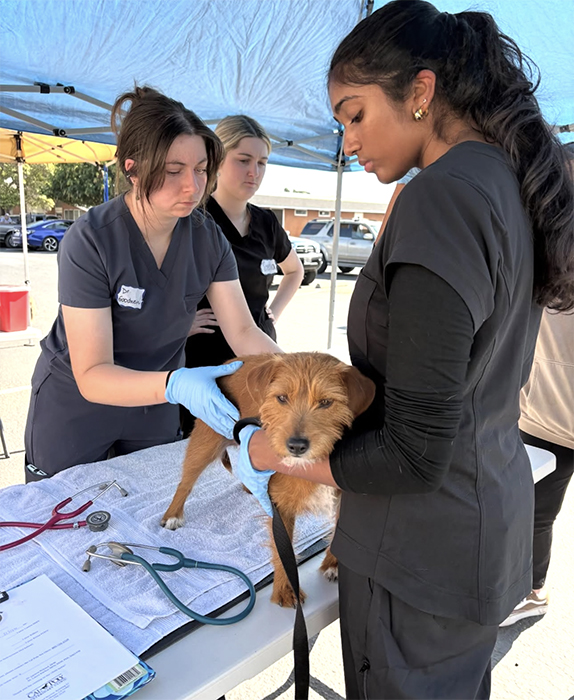 Running busy community clinics also brings challenges. Students must balance technical skills, client communication and time management — often while working outdoors in unpredictable weather. “We have clinics that are exceptionally busy, and sometimes clients are impatient with waiting,” Backus said. “Remaining calm and patient in that situation can be really challenging.”
Despite these challenges, the program continues to receive strong support from the community. Many clients are repeat customers to the clinics and pet owners often express enthusiasm about helping students gain experience. “Clients are so excited to know that these are undergraduate students and that their presence is also helping students learn,” Backus said.
For Backus, the enterprise embodies Cal Poly’s educational philosophy. “It is literally doing a veterinary clinic,” she said. “And even more importantly, it gives students a chance to Learn by Doing through service.”
While the clinics address only a fraction of the overall need for veterinary access in the community, their impact is significant.
“What a team of students is able to accomplish in a single Saturday clinic is truly amazing,” Backus said. “We are able to provide care for hundreds of animals each year and connect with individuals and communities who really need that care, all while students are building skills for a lifetime.” The last clinic of the spring quarter is scheduled for Saturday May 16, 2026.
To make an online gift in support of the Animal Science Department, please use the GIVING link. If you would like to designate your gift for a specific major, scholarship, club or team, please contact Tim Northrop at tnorthro@calpoly.edu
Read more stories in the Spring 2026 Newsletter